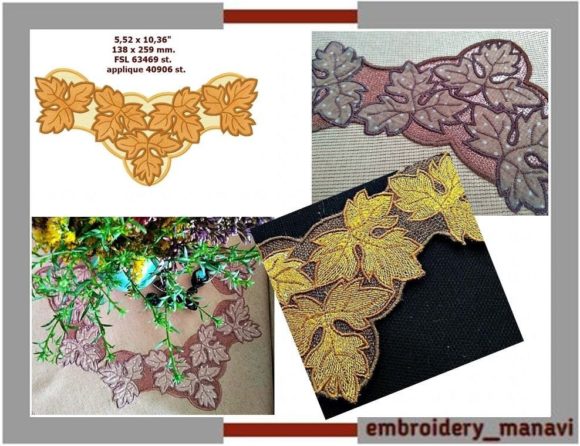
Grape Leaves Cutwork FSL and Applique
When I first opened the file for Grape Leaves Cutwork FSL and Applique, my initial reaction wasn't about the stitch count or the file format, but rather the mood it instantly conjured. There is a distinct shift in atmosphere when you move from generic floral patterns to something with specific botanical character like autumn grape leaves. This design doesn't just sit on the fabric; it feels like it belongs there, evoking the warmth of a vineyard harvest or the cozy corners of a rustic kitchen. For a designer evaluating this for real-world application, the visual personality is immediately strong: organic, slightly textured, and undeniably seasonal.
The combination of Free Standing Lace (FSL) techniques with applique elements creates a sophisticated depth that flat embroidery often lacks. In my experience, the cutwork aspect adds a layer of intrigue that makes the finished product feel bespoke. It suggests a higher level of craftsmanship to the end user, which is crucial whether you are selling a handmade item at a craft fair or listing a digital asset for other creators. The layout flows naturally, mimicking the way actual vines drape, which gives it an editorial quality suitable for high-end home decor or boutique branding.
From Digital File to Finished Product: A Real-World Scenario
To truly understand the potential of this design, imagine a scenario where I am preparing a custom order for a local bakery owner who wants to brand her new line of holiday gift boxes and aprons. She needs something that screams "autumn" without being cliché pumpkins and turkeys. Grape Leaves Cutwork FSL and Applique became the centerpiece of this project.
I started by testing the design on a heavy-duty cotton canvas intended for tote bags. The applique component allowed me to use a rich, deep burgundy fabric that contrasted beautifully against the natural beige of the bag. The cutwork sections, stitched in a lighter gold thread, caught the light in a way that added dimensionality. When the machine finished stitching, the result was not just a logo; it was a texture. Customers handling the tote bags could feel the raised satin stitches and the delicate open spaces of the lace work. It elevated the perceived value of the item immediately.
This same design would translate equally well to a sweatshirt for a fall fashion collection or a nursery pillow cover. The versatility lies in how the leaf shapes can be scaled. For a baby onesie, I might reduce the size to focus on the delicate edges, using soft pastel threads. For a large throw blanket, the full spread of the vines creates a stunning focal point. The key here is understanding that this isn't just a clip-art image; it is a structural element of the garment or decor piece.
Where This Design Shines in Commercial Projects
For Etsy sellers and small business owners looking to expand their inventory, Grape Leaves Cutwork FSL and Applique offers several strategic advantages. First, the "In The Hoop" nature of the project simplifies production. If you are creating embroidered patches or specific home decor items like tea towels, the integrated construction reduces assembly time compared to designs that require separate applique pieces to be sewn on later.
- Home Decor: The design fits perfectly on linen table runners, napkins, and pillow covers. The autumnal theme resonates strongly during Q4 sales cycles.
- Apparel: It works exceptionally well on denim jackets, flannel shirts, and even structured caps, provided the curvature is managed correctly.
- Gift Items: Personalized gifts featuring this motif often sell better because the intricate detail implies care and effort, which buyers appreciate in the handmade market.
The visual appeal of the cutwork also plays a significant role in marketing. When creating printable mockups for your shop listings, the negative space created by the FSL allows the background fabric color to show through, making the design look less dense and more breathable. This clarity helps customers visualize the final product on different fabrics, reducing hesitation and increasing conversion rates.
Navigating Technical Challenges and Fabric Limitations
However, as an experienced reviewer, I must emphasize that this design requires careful handling. It is not a one-size-fits-all solution for every embroidery project. The success of Grape Leaves Cutwork FSL and Applique depends heavily on the stability of the base material and the skill of the operator.
If you plan to use this on stretchy fabrics like jersey knits for t-shirts, you will need to be extremely cautious. While the applique portion provides some stability, the free-standing lace elements rely entirely on the integrity of the stabilizer underneath. Using a lightweight tear-away on a stretchy knit could lead to distortion or puckering. For these applications, a heavy-duty cut-away stabilizer is non-negotiable.
Similarly, dark fabrics present a challenge. Because the cutwork relies on open spaces, a dark background can make the delicate lace details disappear if the thread color isn't chosen carefully. You may need to experiment with metallic or high-contrast threads to ensure the design pops. Conversely, on very light fabrics, the density of the fill stitches might become too heavy, adding unnecessary stiffness to the garment.
Small hoop sizes are another consideration. If your machine has a limited working area, you might find that the full spread of the grapevine design gets cropped, losing its organic flow. Always check the hoop size requirements before committing to a large batch production run. Additionally, while the design looks great on flat surfaces like aprons or tote bags, applying it to curved surfaces like baseball caps requires precise digitizing adjustments to prevent the leaves from warping unnaturally around the crown.
Essential Notes for the Embroidery Designer
Before you add this design to your commercial library or start stitching up a rush order, there are practical steps you must take to ensure professional results. Testing on scrap fabric is the golden rule. Use the exact thread colors and fabric types you intend to use for the final product to verify stitch density and tension.
Review the stitch density closely. Designs with extensive fill stitches can sometimes become stiff or difficult to press, especially if the machine pushes too much thread into the fabric. Inspect the small details of the cutwork sections; sometimes, fine lines can break or merge if the thread tension isn't perfect. It is also wise to test the design in black and white mockups to ensure the contrast holds up regardless of the thread color palette you choose.
Don't forget to check your licensing terms. If you are purchasing this as a digital embroidery file for resale, confirm whether you have the right to sell the finished physical products. Some licenses restrict commercial use or require a specific attribution. Furthermore, ensure you have the correct software version to open the file, as compatibility issues can ruin a project timeline.
In conclusion, Grape Leaves Cutwork FSL and Applique is a robust tool for any designer looking to add a touch of autumn elegance to their portfolio. It bridges the gap between technical precision and artistic expression, offering a versatile option for everything from personal hobbies to serious craft businesses. By respecting its technical requirements and leveraging its unique aesthetic, you can create finished products that stand out in a crowded marketplace. Whether you are decorating a holiday gift or launching a new boutique line, this design offers a solid foundation for creative success.